
There’s something about sharing a similar taste in music that really bonds us as humans. A couple of years ago on a hot summer day, a girlfriend of mine messaged me asking if I wanted to go see the artist known as Massano perform in Lausanne. Being a lover of spontaneous plans and melodic techno, I tagged along gladly. The set was incredible and the crowd was vibrant, fun, and incredibly friendly. Now if you’re as short as I am, and you’re in the middle of the crowd at one of these things, you know that you can’t see much more than the back of the tall bloke in front of you. I ended up watching some of the concert through the phone of the person next to me – the videos he was taking were well-framed, at the perfect angle, and allowed me to see Massano well. It was clear he knew what he was doing. This person was Hassan – and just like that, I’d gained a techno brother.
That was around two and a half years ago, and since then we have gotten to know each other’s friends and family members, attended a myriad of concerts as ensembles and generally built a valuable friendship, all revolving around music. My first experience of attending the Montreux Jazz Festival was with Hassan. I had been stranded at the last minute by a friend, and Hassan welcomed me into his group. Confetti falling from the ceiling while Rüfüs Du Sol played Surrender, tears in all of our eyes, one of my most unforgettable concert experiences.

I knew him as a generous and kind person who was in a love affair with music. I eventually learnt that Hassan taught himself how to code and works at a company doing just that, all while maintaining old businesses and creating new ones. He is a true creator at heart, be it business or music, and as his latest venture he has started his own record label.
French rap enters the studio
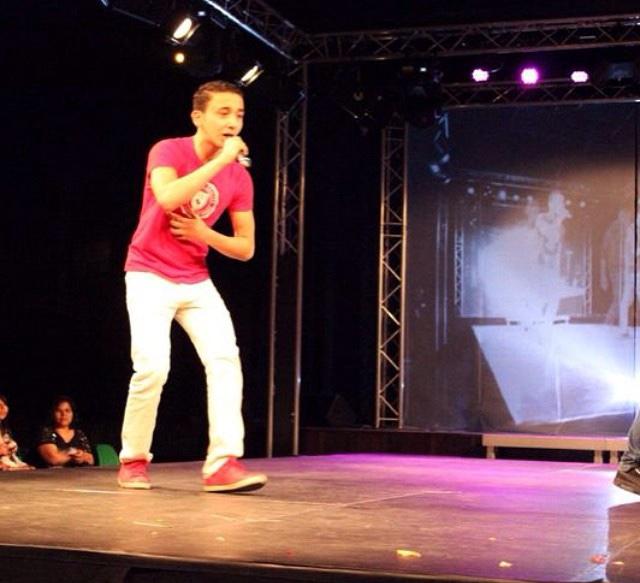
Writing this piece has been an absolute blast for me, because I learnt about a whole new side of Hassan. Uninfluenced by his siblings who were huge fans of American rap and Michael Jackson, Hassan started his own musical path towards old French rap at a young age. His favourite rapper at the time was Sexion D’assaut, and by age 11, Hassan had already started writing original French rap pieces and producing them. Luckily, he had a true comrade in arms in his best friend Niko, who shared his passion for rap and had posted his own first song online at the age of just 7. At 13, Hassan was recording tracks in his friends’ house as part of a rap group known as ‘L’1FEXION’. Once they had uploaded their first track, they produced another and another one after that (you can thank me later for unearthing these hidden gems), and even performed their hits at community concerts.
This gave Hassan the confidence to partake in Atelier Rap in Geneva at 15, where he was tutored by artists he looked up to. The likes of Geule Blansh and Rox Anuar taught their pupils invaluable lessons on various performance techniques such as how to properly hold a mic, how to sing with a partner and on-stage body language. At the country-themed festival that ensued, he took to the stage to perform an original song about Spain – a core memory that he still carries fondly to this day. Unfortunately, this was the last the world got to hear of Hassan the rapper because he then moved to Spain to pursue his education. It was however just the beginning of his musical pilgrimage.
In techno we trust
More shocking revelations were uncovered when I learned that at some point Hassan had lived in Berlin for almost 2 years after coding bootcamp, and had not once attended a techno rave. How this was possible whilst living in the undisputed Capital of Techno is truly confounding considering his love for music. After his stint in Berlin and 8 years of living outside Geneva, the prodigal French rapper returned. One evening, while relaxing with his brothers, the youngest, Hussein, managed to persuade his reluctant siblings to head to Audio, a popular techno club in Geneva, hoping to lift their spirits. It was meant to be a regular line-up with local resident DJs, but it was the moment everything changed for Hassan. He had not just discovered the world of techno, but had fallen in love with it. A classic example of you never know if you like something till you try it.
Hassan loves to capture the drops and special moments during these concerts. He went on to create a brand out of it with the Instagram page Technooway for the joy of it. He quickly saw the power of such techno pages in the spread of content online. The page rapidly gained popularity when he was invited backstage with the queen of techno herself Nina Kravitz who was performing at Electronic Brunch in Barcelona. After sharing a viral video of her performance, which she later reposted, the page’s followers skyrocketed, and now has a booming 33,000 followers and counting. Realising there really was something there, in combination with his love for creating, he decided to take it to the next level. He initially wanted to start out by organising techno events in Geneva, but comprehending how tricky it would be to go from 0 to a 100 so quickly, he decided to start his own record label first.
Ikigai – A reason for being
I vividly remember Hassan selecting the name for his label, because he actively seeks inputs from his friends – a quality I find very genuine. He settled on Ikigai – a Japanese concept that encapsulates one’s reason for being through the intersection of what one loves, what one is good at, what the world needs and what one can be paid for.
With a full-time job, as well as real-estate projects on the side, he does not have the time to learn all the required software for production from scratch, and so decided to run Ikigai in an unique way. He is starting with building the label around artists and music he enjoys, and then aims to organise an Ikigai showcase around these artists. For this, he is required to sign at least 3 artists, of which he has already secured 2. Thus far Ikigai features music from the genre of Afro-house – a sub-genre of House music that emerged in the 90s. The choice of the current genre goes beyond Hassan’s fondness of it. After studying the market carefully, he found that Melodic techno, Afro-House and Deep Afro are booming in Geneva at the moment.
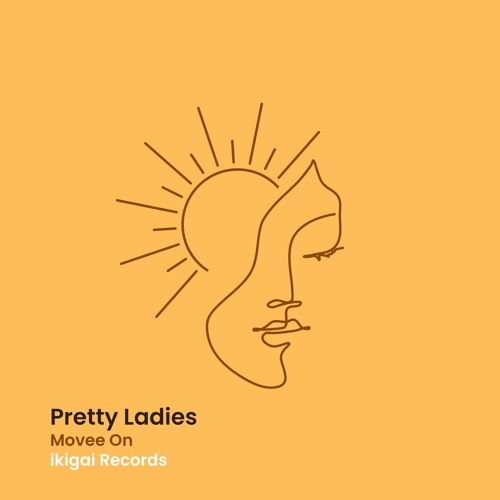
The first artist Ikigai has signed is MOVEE ON – a duo originating from Los Angeles, California who are known for their groovy house tunes with a melodic influence. Their debut song with Ikigai was Pretty Ladies. It is an absolute vibe, and you cannot help getting jiggy with it. The second song Ikigai produced was So Fine by Francesco Bianco – an Italian DJ who aims to create inter-generational sounds. To complete the trifecta, Hassan is on the hunt for local Afro-House talent from Geneva, since he also wants to showcase and promote regional creativity. I must say my favourite part of Hassan creating his own label is that I get to listen to the tracks before they are released. It feels like a sweet little secret that I’m in on but no one else knows yet.

I’ve always wondered what ‘signing’ an artist really entails. Hassan explained to me that signing with a label involves transferring certain responsibilities, such as handling royalties, to the label. For instance, with Movee On, he took their demo, edited the files, and managed the production process. Similarly, with Francesco Bianco, the label also handled mastering, which involves fine-tuning each instrument’s sound. While he collaborates with a studio for this work, his Swiss-based label, Ikigai, remains open to hiring talent remotely. Labels also play a crucial role in remixing tracks, as they must obtain permission from the original artist—a process that can take considerable time due to the need for a royalties agreement. Interestingly, widely-recognised DJs often earn a majority of their money performing unreleased tracks at concerts rather than from releasing music. Rising artists, such as Badbwoy and many ‘TikTok producers,’ often remix famous tracks but face significant hurdles in clearing samples. Without established industry connections, securing a deal with a major label to obtain these permissions can be nearly impossible. In contrast, famous DJs, such as Keinemusik, often keep tracks unreleased intentionally to drive exclusivity and encourage fans to attend their live performances. For example, Keinemusik – a German electronic music label – frequently takes samples from other songs, such as Lazare’s Not Control, which was released only a month ago. Similarly, tracks by Badbwoy, played by Keinemusik, are now finally gaining revenue when listeners identify them at sets through apps like Shazam.
Hassan has already predicted the biggest obstacles in promoting Ikigai backed songs. With social media ruling the marketing world, he needs to create engaging videos that have the potential to go viral, encouraging others to use the tracks as audio for their own content. Additionally, and this one may prove to be a bit more uncontrollable, he somehow needs to get renowned DJs in the field to sample Ikigai songs for their own sets. The fact that he understands a vast amount about the industry and is excellent at building contacts and relationships, leaves me no doubt that he will overcome these obstacles.
On that note, I have a last little something to add – happy birthday to you Hassan! I planned the posting of your article for this day as a little gift to you. For you to see how far you have come and how impressive you are, and how much we cannot wait to see what you come up with next.
 Talks in Tan-dem
Leave a comment