
Perfect timing
In Switzerland, once you become a naturalised Swiss citizen, you have what is called a ‘place of origin’, which is the municipality where you became naturalised. This Heimatort or Lieu d’origine in German and French, respectively, is passed on through generations, and used to have a much larger significance historically, but today serves more as a symbol of pride. 2008 – the year I turned 13 – was the year I moved with my family to a municipality called Herrliberg in the canton of Zürich. It has less than 7000 inhabitants, and since I became a Swiss citizen, I have been proud to call it my place of origin.
As luck would have it, 2008 was the same year that the subject of my next profile – Natalie – moved to Herrliberg too. In late summer that year, the community house of Herrliberg had organised an excursion to a couple of municipalities in the canton of Graubünden, including Vignogn (which joined 7 other small municipalities in 2013 to become the municipality of Lumnezia) and had a modest population of 190 in 2006. They were in a way our ‘sister villages’, and since they were so small, Herrliberg was helping support them in areas such as education and sanitation. During the visit, they organised informative talks, walks and a lovely lunch in their town hall. It was the perfect way to get to know other ‘Herrlibergers’, but there was just one problem. Since we were brand new to Switzerland, I spoke about 20 words of German at the time, making conversation difficult to progress past the initial hello’s and how are you’s. Whilst walking alongside Natalie however, we were delighted to find that she spoke English, and therein began our friendship!
It all started with a drafting ruler
Years before Natalie was born, her mother moved from England to Rapperswil (the Riviera on the upper part of lake Zürich), and her father from Spain to Zürich, where they met in German class. Natalie grew up hearing nostalgic stories about ‘the beautiful years in Zürich’, bringing her back many years later to build an illustrious career.
Natalie herself was born in Spain, and remembers vividly that she knew what she wanted to pursue as a career from the young age of 15. At school she was partaking in a 3D graphic representation class taught by a profoundly inspiring teacher. At the same time, her father had bought her a drafting ruler, that she made frequent use of, in and out of the classroom. Natalie knew then by how much she enjoyed this combination of happenings, that she wanted to be an architect.
She embarked on her architectural journey with a Bachelor’s degree in Architectural Studies in the Canary Islands. During her studies, she took a bold step that she now highly recommends to all young students if possible: she participated in an exchange semester at Oxford Polytechnic, which she believes truly broadened her perspective and enriched her learning experience. She then completed her bachelor’s degree in Madrid. She vividly recalls the biggest challenge of her academic journey: transitioning from traditional hand-drawn designs to computer-based drafting – a daunting task at a time when storage was limited to just 175 KB (can you imagine that!). Eager to expand her expertise further, she later attended a specialised course in France, focusing on Landscape Architecture, which added yet another dimension to her evolving architectural vision.
She stuck around in France for another 4 years, and here comes the name-drop – she worked with Dominique Perrault himself, the architect behind the iconic National Library of France. Her work during that time was intense and fast-paced, with enormous responsibilities. By the age of 27, she was already a project manager for a 117m high skyscraper – a milestone she remembers distinctly and describes as an incredibly exciting chapter of her career. Having gathered experience in landscape, as well as the design aspects of architecture, she felt she then needed exposure to the construction side. Having heard of ‘the beautiful years in Zürich’, and with Switzerland being known for high-quality construction, she moved to a firm in Zürich.
During her 7 years in Zürich city, Natalie achieved more remarkable milestones. She was part of the team that won the competition to design the Wukesong Indoor Stadium for the Beijing 2008 Olympics – a prestigious project that became the celebrated basketball venue. Closer to home, she also led the winning design for a research centre in Neuchâtel, a project she saw through from concept to completion, showcasing her ability to manage every stage of the architectural process.
The house down the street
Having accumulated a wealth of knowledge and digital experience in design and construction, Natalie then decided it was time for something different. Back to the future of 2008, the year we first met her, she took a year-and-a-half sabbatical and purchased a house a mere 2-minute walk from our apartment building. The house, a long and columnar structure spanning three floors, marked the end of a row of terraced houses, standing out with its unique charm and character. Built in the 1780s, the house was in a dilapidated state when she bought it, requiring significant care and attention to restore its former charm.
Drawing on her expertise in Vernacular Architecture – a design approach deeply rooted in its surroundings, emphasizing local craftsmanship and traditional materials – Natalie approached the restoration with thoughtfulness and respect for its history. Having taught Vernacular Architecture at university, she was uniquely equipped for the challenge. For example, the timber used for the stairs, dating back to 1780, was likely sourced locally from uphill forests. Recognising the value of its origins, she ensured it was treated and preserved in a way that aligned with its historical and environmental significance – a logical and respectful approach that defined her restoration process.
Natalie threw herself into the work, tackling nearly every aspect of the restoration herself. She took on the demolishing, sandpapering, and refinishing of floors, walls, and ceilings, even removing old joints and installing entrance tiles. She handled plastering and other intricate details with her own hands. On one of my numerous walks down to the train station past her house, I remember her cheery face telling me happily that she had even installed a port-a-potty (a toi-toi) in the small patch of empty land opposite her home. With no working plumbing during part of the renovation, it was her creative solution to keep things moving smoothly.
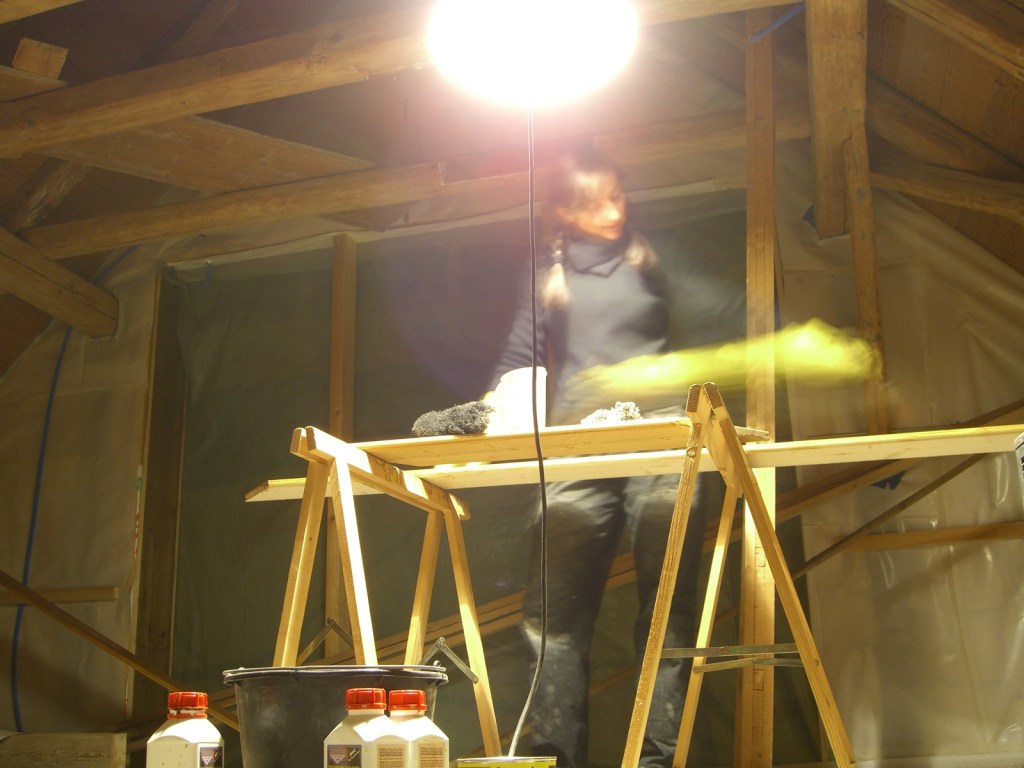

While she did enlist professional help for things like electrics, she was always on-site, overseeing every step of the process. For Natalie, the goal wasn’t just to restore the building but to breathe life back into it. She believes a home like this should be enjoyed and appreciated – a bit like a hotel, but one lovingly cared for by someone who treasures its history.
Plagaro Cowee Architecture
On the first floor of this very building, she took the bold step of founding her own firm: Plagaro Cowee Architecture. She wanted the autonomy to be her own boss, make her own decisions, and have the freedom to work with partners of her choosing. Alongside running her firm, she is also a professor at the University of Luzern, where she not only teaches, but also organises seminar weeks, a highlight for her students, during which they travel across Europe for a week to visit and study architectural projects firsthand.
As I sat in her office surrounded by pictures and designs of various projects and competitions she has won and participated in, I couldn’t help but ask how an architect discovers these opportunities. She explained that architects are often invited to participate in competitions, where they are provided with a detailed file outlining the requirements – everything from the purpose and cost to the intended audience and overall goals. For public competitions, anyone can register and take part, while others, like her work for the Rowing Club in Erlenbach, require a direct invitation. One particularly memorable competition that she won was for a bridge in Olten. She explained that while this competition was decided on by a committee, there are some scenarios, albeit rare, where the final vote is open to the public.
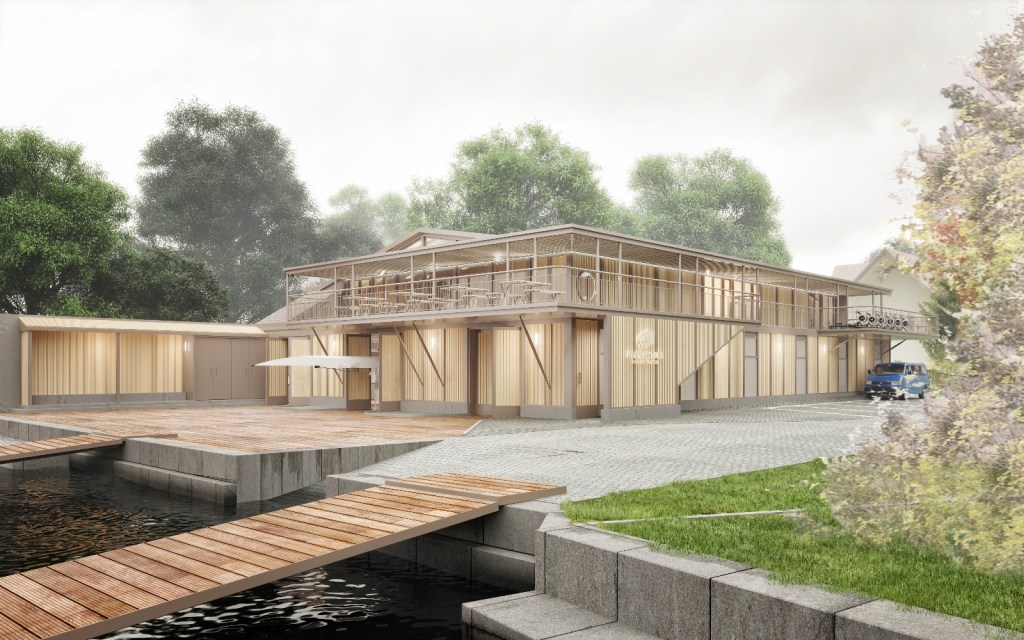


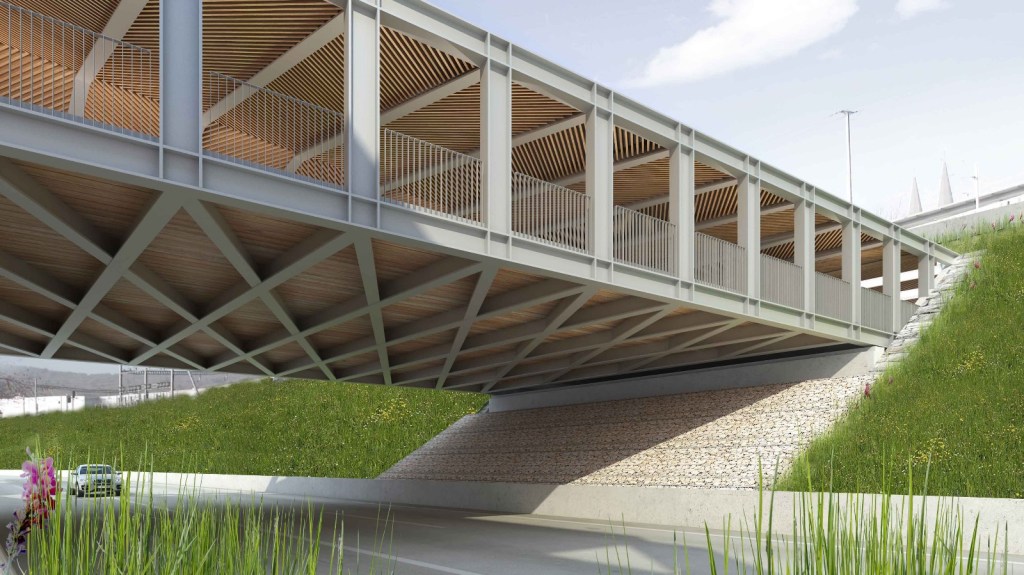
She recalls the first competition she had ever entered back when she was an architecture student also happened to be her first victory – a graphic design contest for a wine company. Years later, one of her first wins for Plagaro Cowee Architecture was the design for the Rössli restaurant in Herrliberg, making me think of her every time I walk past it. Winning all these projects, of course, comes with its fair share of losses. Yet Natalie doesn’t see losing competitions as a setback; rather, she views them as valuable opportunities to learn, refine her craft, and expand her portfolio. For her, each experience – win or lose – fuels the passion and resilience that have come to define her remarkable career.

I closed the interview by asking Natalie about her dream project. She explained to me earnestly that her favourite project always feels like the one yet to come – a sentiment rooted in her belief that with every new endeavour, her experience and perspective continues to grow. When pressed further, she shared that her dream projects are never grand, abstract visions but tailored works informed by their unique needs and context. She loves analysing the specifics of a site – its location, surroundings, and the relationship between the structure and its environment. For Natalie, the process begins with listening and fostering a dialogue with the client, understanding their vision, and crafting something that not only meets their needs but also harmonises beautifully with its setting. It’s this thoughtful, tailored approach that defines her as an architect. Having learned so much about Natalie over the years and through this insightful conversation, I find myself hoping more than ever that she’ll be the one to design my dream house someday!
 Talks in Tan-dem
Leave a comment