
My friend Linda
On the 27th of May 1995, in a beautiful city called Gothenburg on the west coast of Sweden, a little baby was born with lots of dark hair on her head. That baby was me! Unbeknownst to me, just some months earlier in 1994, another baby was born – this time with eyes blue as the sea. She hails from Norrköping, an industrial town around 3 hours east of Gothenburg, also given the name ‘The Manchester of Sweden’. But more importantly for our story, it is the town that Linda was born in.
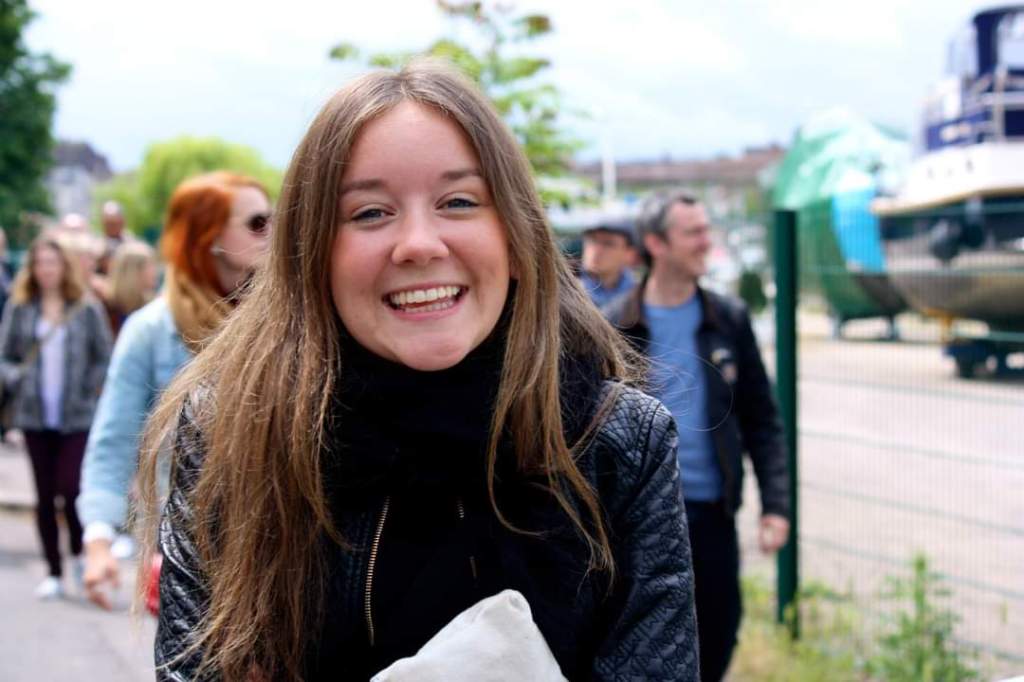
Cut scene to around two and a half decades later at the joint birthday party of two of my colleagues. If memory serves me well, Linda and her partner (who for context is a colleague of mine) crash the party as they were already with a couple of our other friends before. The introduction was a blur, because all I remember vividly was learning that she is Swedish. In the year that we met (2021) there were 8,392 Swedes who stated Swedish as their primary nationality whilst residing in Switzerland. And somehow, Linda was the first one I met in Geneva having lived here since 2016. So you can only imagine my excitement. Top that off with her being so incredibly friendly and our energies matching instantly, and voila – the beginning of a charming friendship.
A phenomenal family
Linda is a paradox of a person – she is wildly fascinating yet deeply unaware of it. She hails from a family of equally remarkable individuals, which may explain this intriguing blend of traits. Something that I did not know until we sat down to talk this time, whilst munching on Gifflar, is that Linda’s grandfather on her mother’s side (or morfar in Swedish) was Estonian. His brother worked at the UN in New York, and was in fact the one who proudly carried the Estonian flag into the UN when they were liberated from the Soviet Union in 1991.
Across the Atlantic Ocean, Linda’s grandparents on her father’s side (her farmor and farfar) emigrated from Sweden with their family and opened up a hospital in the Central African Republic. Driven by the knowledge that many in parts of the world were dying from ailments and diseases easily treatable in Europe, they were inspired to do more and strive for better solutions. Her farmor being a midwife and her farfar being a medical doctor with expertise in malaria were more than fit for the job. At the time the country was experiencing heightened civil unrest, filling up the hospital with casualties of the infighting. Unfortunately, Linda’s farfar experienced this first-hand and was involved in a near-fatal car accident. The accident lost him his arm – and very nearly his life. As dramatic as it sounds, he was advised to seek treatment back in Europe, and that a decision to stay would be fatal. He made the wise choice of heading back home to heal, the irony of his privilege sitting heavy on his heart. He was never the same after the incident, but hearing his story after all these years makes me realise that some of the kindest of people bear the biggest burdens on their souls.
A big part of Linda’s father’s identity is that he grew up for 10 years in the Central African Republic. Naturally, wanting to share this large part of his life, he took Linda to visit his village, which takes days to travel to. Learning about her family’s history and living these experiences made Linda strongly aware of the injustice that is inequality from an early age. Imagine the weight of this knowledge on a young girl living in Sweden, a country that consistently ranks high in various measures of economic success and quality of life. She found it difficult to normalise daily struggles faced in high school. However, things were quickly put into perspective as she faced a tragic event while completing this phase of her life. This event, which she describes as confoundingly sad and heavy made her realise that there were problems everywhere – in Sweden too – and problems were relative. It made her strive to learn how to use her energy and efforts as efficiently as possible to help people and the environment. Not just those far away, but also those around her in her immediate surroundings. And so began her mission.
Linda becomes an Engineer… but not quite yet
For those who decide to pursue higher education and go to university after high school, the most common choice seems to be matriculating within a couple of years upon graduation. And although it is common in Sweden to take a gap year after high school, Linda took 5! But they weren’t your typical ‘travelling to find myself’ type of years, despite the fact that she did actually find and solidify her calling during this time. Being my first interview for this blog, and realising that these talks take many twists and turns that I did not foresee, in my post-interview analysis I diligently made a timeline to help the trajectory make sense, because trust me when I say – Linda has been a busy lady.
Right after her technical high school where she focused on physics and mathematics, she took on a 1 year training program in the south of Sweden where she learnt about product management and humanitarian work. It was a sort of global studies programme where she additionally acquired her first glimpses of knowledge on human rights. As a part of the programme, she spent 3 months in Swaziland where with a boarding school for girls learning sewing and fashion design, she studied how the products they created were managed. After this year, she spent some time in Paris, where she built on her understanding of the French language while working as an au pair. She then moved back to Sweden to work with Interact – an NGO that carries out humanitarian work in more than 30 countries. It was at this time that Linda lived in Zambia working on a multitude of projects. She worked on a micro-credit project that empowered local women to secure small loans, enabling them to finance their businesses, such as through purchasing fabric. She participated in a bush-engineer project, where locals upcycled unwanted waste items into items with value. One such example is they made photoframes that could be sold out of broken windows. She helped create a space for ladies to sew and make garments based on sewing machines that had been donated to the organisation. The list goes on; however these projects faced a shared fundamental issue: the lack of electricity.

For Linda, real-life experiences profoundly shaped her education as she identified pain points in the world—an approach that stands in contrast to many of us, who typically acquire an education first and then seek work to apply our skills. She attended Mid Sweden University and Studied Energy Engineering remotely from Paris, passing her exams in the Swedish embassy there (something I found intriguing as I did not know this arrangement was possible). After this she pursued a Master’s degree in Environmental Science at the University of Geneva – an interdisciplinary programme that helped her link her Engineering degree to her global studies experience.
It all fits together
As cliche as it sounds, like pieces of a puzzle you’ve been working on for ages, it all fits together for Linda’s path. She now works at PVsyst SA, a company that created the PVsyst software that simulates photovoltaic systems. To put it into extremely simple terms, it calculates the amount of solar power a solar panel would be able to capture at any given moment based on a variety of parameters such as the angle and site of the panel. For example, solar panels can have trackers that help them move with the sun, and others can have a bifacial system that gather the sun’s rays from the front and back. She is part of a team that studies the use of the software in society, but is also heavily involved in the pro bono work the company does. Coming full circle, she has been able to install solar panels in villages in Zambia to help provide them with electricity to work.
If you are like me and know very little about how solar energy works, here are some fun facts that Linda taught me. Solar energy is not something that can be planned and predicted, but it can be simulated. As the solar energy is produced, it has to be consumed right away since it cannot be stored. She explained to me the Duck curve which illustrates the relationship imbalance between production and consumption of solar power. It shows how the generation of solar energy peaks around midday, but declines sharply in the evening when energy demands increase. The mismatch between the supply and demand resembles a duck’s silhouette, and highlights the issue of solar energy integration into the power grid. In classic Linda style, after she outlined the problem she then reassured me that there are possible solutions. With Sweden and Switzerland both utilising their abundance of water bodies to their advantage, hydroelectric power and solar power go hand-in-hand. The midday peak in solar energy production can be harnessed to pump large volumes of water to higher elevations, which can then be released after sundown to generate energy.
And with that we were done without realising the time, having cooked and eaten a roast tomato soup, a quiche and dessert. We could and will talk for many more hours about the past and current happenings of her life over dinners to come, but I learnt more about her in this one sitting than I had over all our time spent together combined. I hope that when she reads this Linda will realise at least in part how much she has already accomplished. She will be a tough act to follow, but not to worry, I have many more friends who are interesting in very unique ways coming up!
 Talks in Tan-dem
Leave a reply to Tanika Bawa Cancel reply