
Have you ever wondered where all your plastic goes? From food packaging, to toiletry bottles, to the smallest little buttons – what happens to it all once we are done with them? Many of us are fortunate enough to be able to put our items in the recycling, feel like we have done our part, and never have to see or think of them again. While in more remote regions, or areas with poor waste management systems, swimming in plastic makes it hard to ignore. Nonetheless, we can do something about this, and if you have ever thought ‘what difference would my little efforts make to this gargantuan problem’, I hope that the story of our next profile – Kelly – will change your mind.
Dr. Kelly
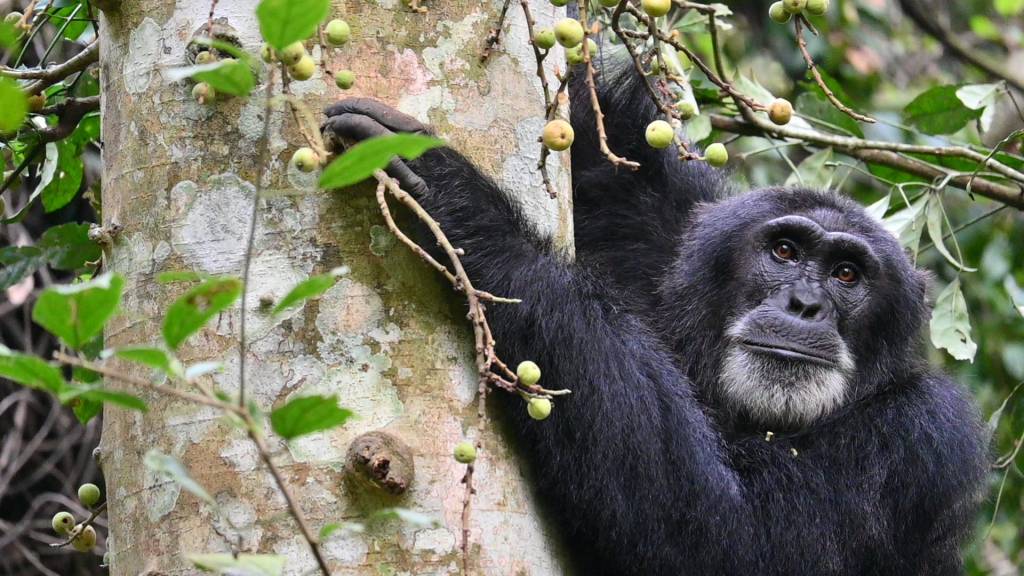
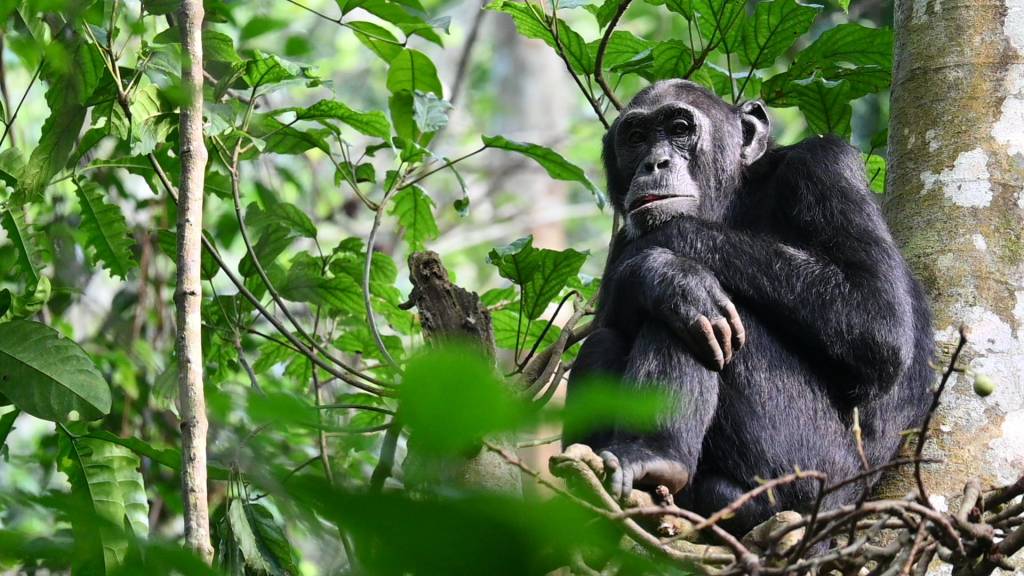
I had heard fantastical stories about this fellow scientist and lifelong animal-lover from her partner who just so happened to start his PhD at the exact same time and department as me. However, it was still some time before I actually got to meet Kelly, because her PhD – unlike mine which involved weeks burrowed in a dark microscope room – involved field experiments in the tropical Bugoma Forest in western Uganda. The primary question she wanted to answer through her thesis was: what influences the tool-use behaviour of chimpanzees in Bugoma? Did tool use come about because chimpanzees needed to extract extra calories from a limited food supply? Or was it driven by opportunity where an abundance of food simply encouraged innovation?
To answer this, she meticulously tracked their diet and energy levels by collecting urine samples from chimps – which allowed her to measure physiological markers like Urinary connecting peptides (UCP) and cortisol. This indicates how much energy they were expending and whether they were under nutritional stress at the time of tool-use. But before she could even begin collecting data, there was another challenge: this particular community of chimps were not used to human presence, unlike the others. Since chimpanzees live in fission-fusion groups, where individuals frequently split up and reunite in different subgroups, some were more accustomed to humans than others. Kelly, along with the hardworking team from Bugoma Primate Conservation Project, spend long hours patiently following them, ensuring they grew comfortable enough for meaningful observations – without disturbing their natural behaviour.


Once the chimps were familiar with her presence, the real experiments began. Kelly conducted a simple yet clever test: a log filled with honey, accessible only through a hole too small for a chimp’s hand, with a honeycomb placed above it. Using motion sensing cameras, she recorded honey seeking behaviours in more than 14 individuals, of which 3 chimps used tools. They showcased their ingenuity by crafting tools such as sticks to probe inside, or leaves mashed into sponges to soak up the honey.
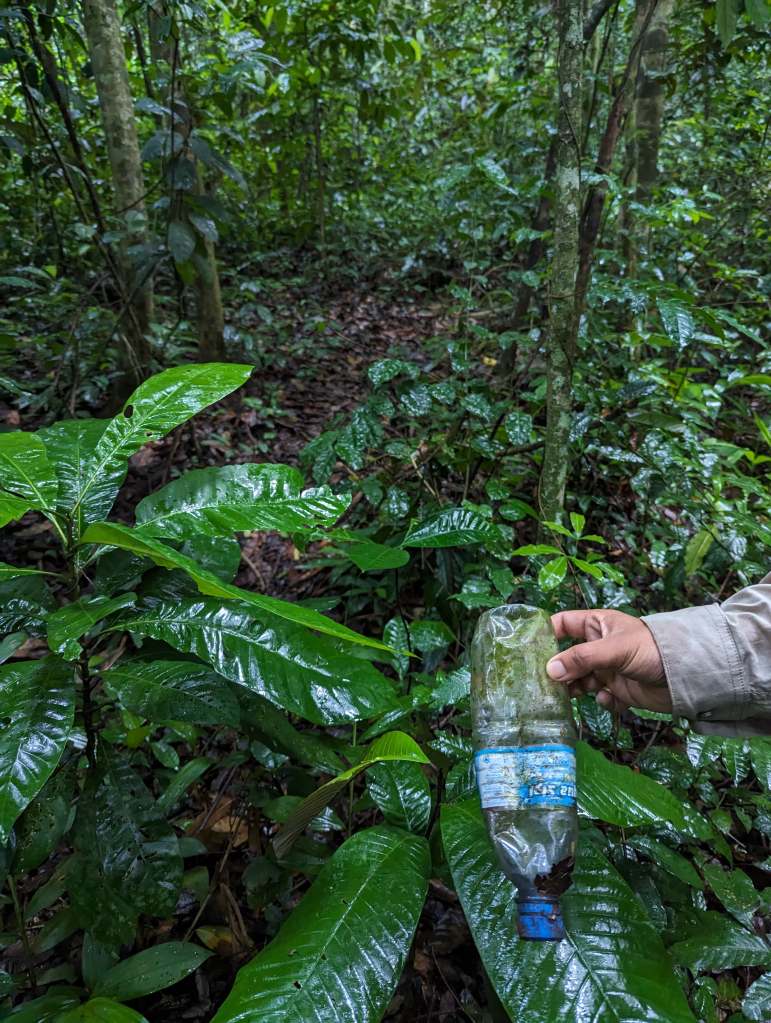
As Kelly spent months immersed in the landscape, she became acutely aware of another pressing issue – one that had nothing to do with chimpanzee behavior and everything to do with human impact. A road that cut through the forest had cars and trucks speeding through, and with them came a deluge of discarded waste – plastic bottles, wrappers, and bags, strewn along the forest edge. The chimps, so attuned to their environment are unable to comprehend this strange intrusion.
Unfortunately, there was no organised waste disposal system deep in the field. This left gathering the plastic and burning it as the only practical solution, an idea Kelly was not the biggest fan of. Instead, she began collecting the waste herself, and hauled bags of plastic back to the city whenever she traveled out of the forest. Kelly had long been passionate about conservation, but the sheer scale of waste in the forest gave her a new perspective. It wasn’t just about grand initiatives or policy changes – she wanted to do something practical, something that could be incorporated into everyday life. An idea had been simmering in the back of her mind for years, but it was during her final field season, surrounded by the very problem she hoped to address, that she decided to act on it.
Turning waste into opportunity
Kelly had always been fascinated by creative, grassroots solutions to big environmental challenges, and during her PhD, she had been closely following the work of Precious Plastic. Founded in 2013 by Dutch industrial designer Dave Hakkens, the NGO takes a radically open-source approach to recycling, empowering local communities to take plastic waste into their own hands. Unlike large-scale recycling systems, which are often inefficient, expensive, or nonexistent in many parts of the world, Precious Plastic provides free, accessible designs for machines that allow people to shred, melt, and remold plastic into useful new items.
More than just an initiative, Precious Plastic has grown into a global movement. Across the world, from Bangkok to Texas, independent groups have sprung up, using its resources to build small businesses, launch educational programs, and even create NGO spin-offs focused on turning plastic waste into something valuable. The philosophy was simple: no permission was needed, no patents restricted use – anyone, anywhere, can use the designs to start tackling plastic pollution in their own way.
This was exactly the kind of hands-on, practical approach Kelly had been searching for. She learned that not all plastics were created equal – some types, if handled correctly, could be reused indefinitely. Anything moldable could be made from collected waste, from everyday household items to durable furniture. The more she explored the possibilities, the more convinced she became that she could bring this concept to life in Bugoma.
The birth of Precious Plastic Bugoma
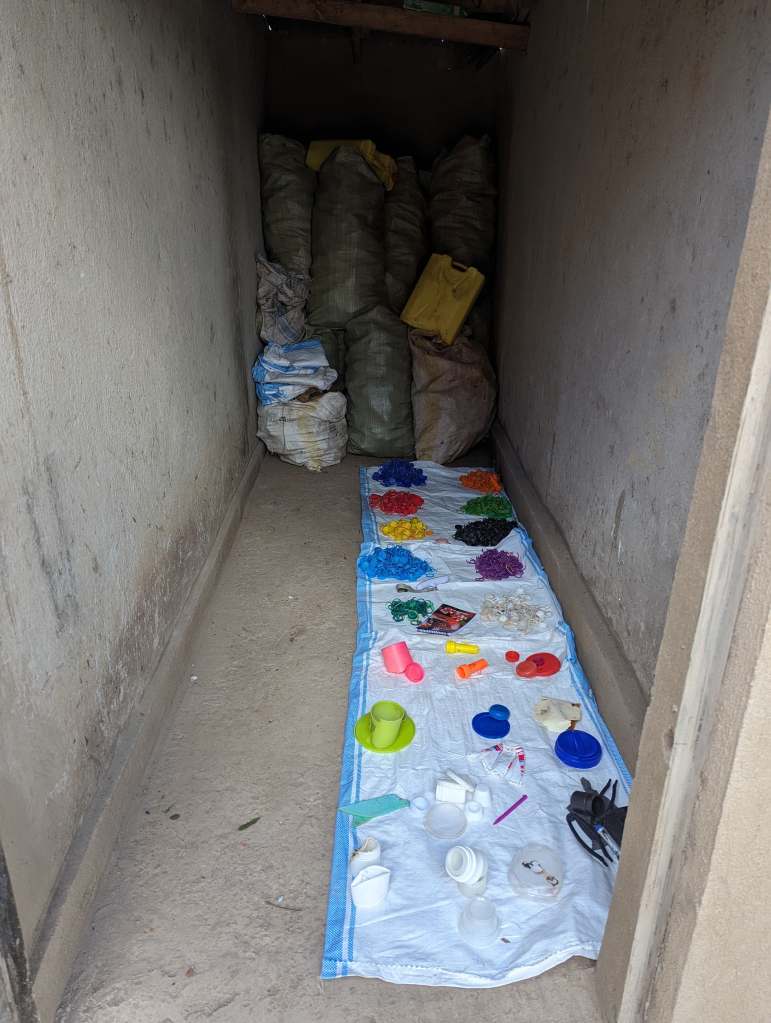
In May 2024, Kelly’s vision became a reality. She founded Precious Plastic Bugoma, a small but determined initiative aimed at tackling plastic waste in the very forest where she had spent years studying chimpanzees. The team has launched with 5 part-time workers in Uganda – with 2 dedicated to collecting plastic and another 2 to washing and sorting. Her husband, Nisheet, has played a key role in making it all happen, by building the project’s website, managing the budget, and ensuring they stay on track financially. So far, Precious Plastic Bugoma has been entirely self-funded by Kelly and Nisheet, but they have recently launched a GoFundMe to help expand their efforts. With official registration in both Uganda and Geneva, Kelly and her team are laying the foundation for something bigger. Even a little support can go a long way (you do not need to take my word for it, you can see the exchange rate here). So if you are looking for a meaningful cause to support, even a small contribution can make a big impact here. Plus, you can follow their progress in a tangible way through their social media.
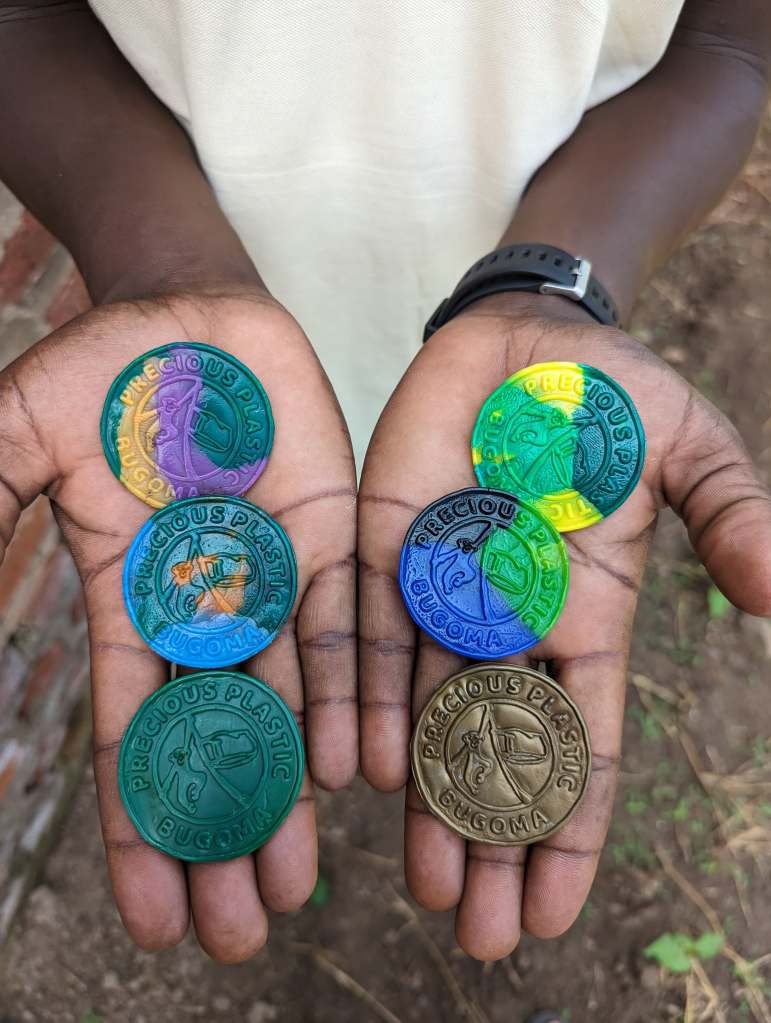
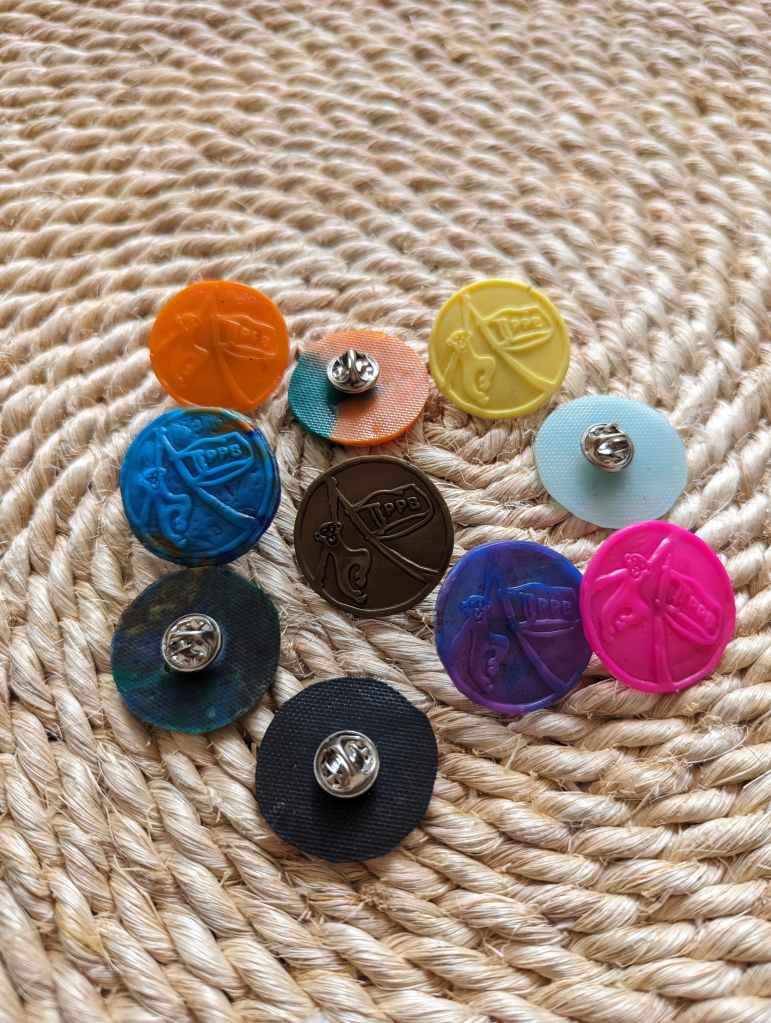
Kelly wants to go beyond just collecting waste; she wants to transform it into something useful. With limited resources, she and her team have begun melting plastic over charcoal fires, and shaping it into small, handmade items like fridge magnets and keychains. While this is just the beginning, it is a valuable proof of concept – if they can secure funding, they could invest in proper machinery and scale up to produce practical, durable goods that people could actually use. In fact, they are already in talks with a local tourist lodge, hoping to sell their products and reinvest the profits into growing the project.
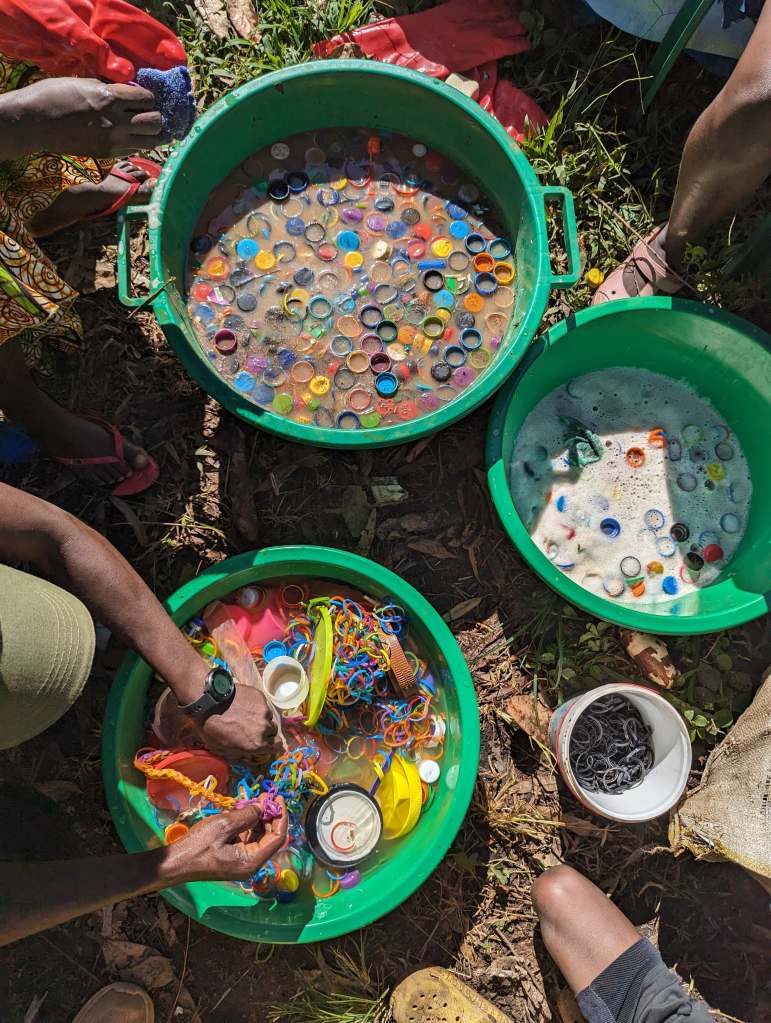
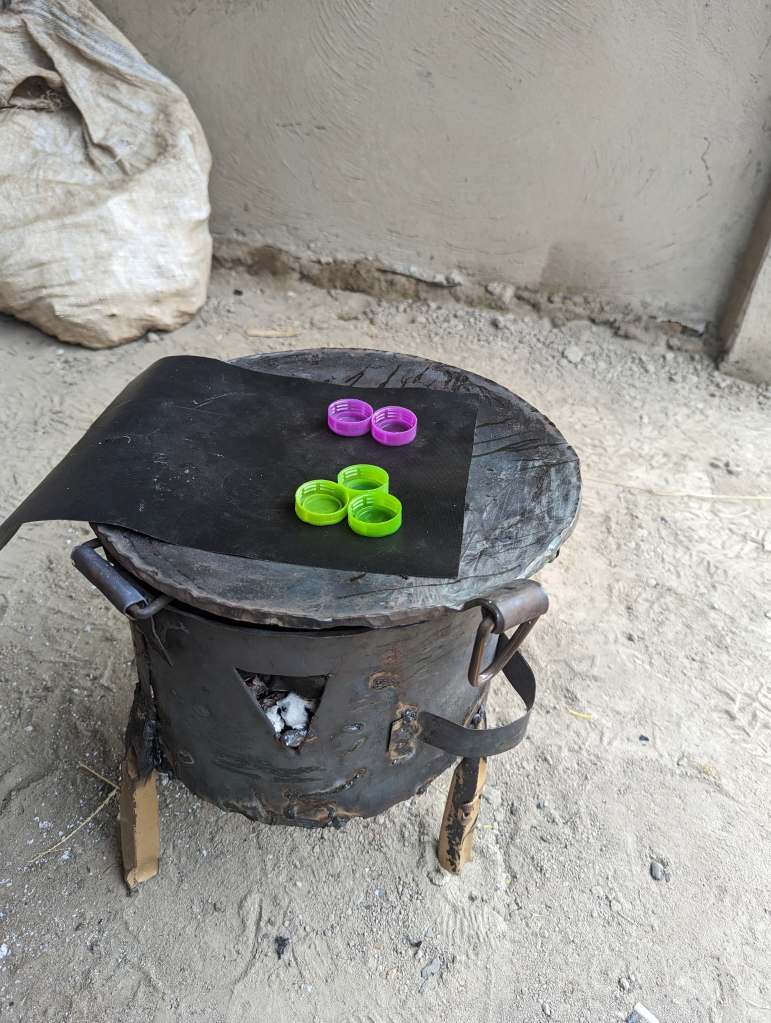
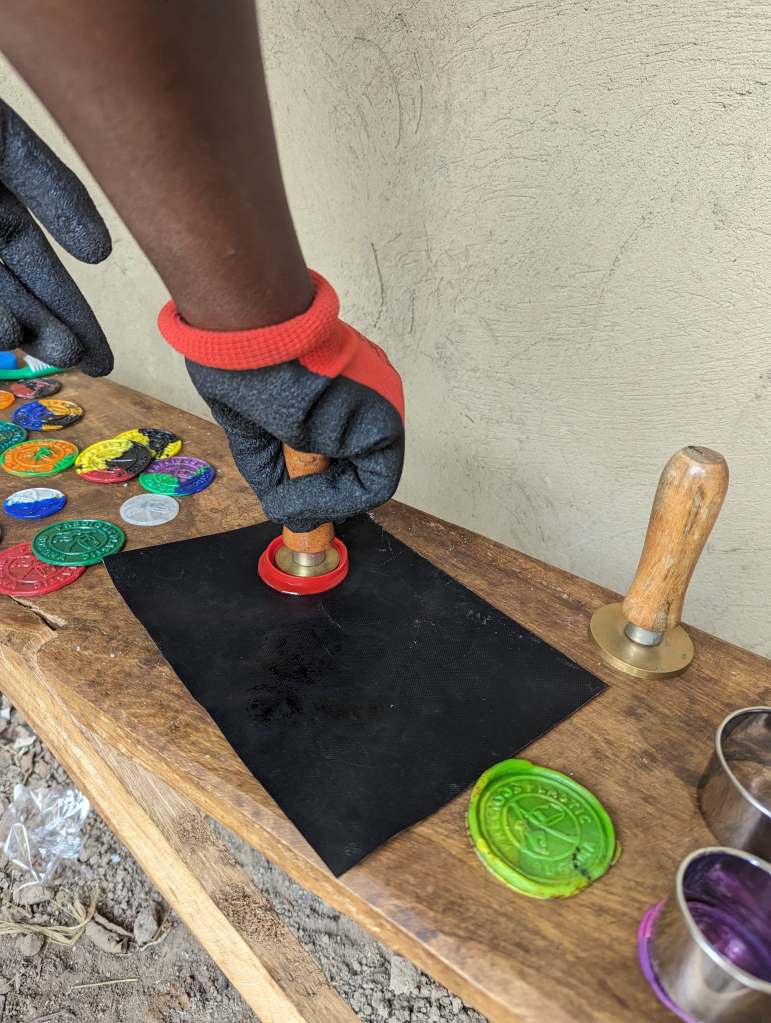
Like any grassroots initiative, Precious Plastic Bugoma has faced its share of hurdles. One of the biggest challenges so far has been the lack of stable electricity, which limits their ability to scale up production. Right now, they rely on melting plastic over charcoal – an imperfect but necessary workaround. However, Kelly is working on a solution by writing a proposal for Linda’s company (you might remember Linda from our very first profile – what a dream collaboration this would be!) to secure solar panels. These would provide a reliable, sustainable power source, allowing them to run proper recycling machines. To make this vision a reality, they also need to construct a small building to house both the solar panels and the necessary equipment. When successful, this will be a game-changer – ushering in the next phase of Precious Plastic Bugoma.
The road ahead
With a solar-powered system in place, Kelly’s team could expand beyond small souvenirs and begin producing molded plastic items using specialised machinery. This would open the door to 2 key product categories. The first is sustainable souvenirs – as tourism in the region grows, these items would offer visitors something far more meaningful than mass-produced trinkets. These gifts made from recycled plastic would be directly supporting conservation efforts in the area. The second is practical items for the community – with the right equipment, such as a sheet press, they could create durable tables and benches, which could be donated to local schools. This would reduce the need for new wooden furniture, helping to conserve other natural resources in the process.
The ultimate goal for Precious Plastic Bugoma is to become fully independent and self-sustaining – growing with the team and evolving to meet the needs of the local community. This is not just Kelly’s project; it belongs to the people of Bugoma. Over time, the Geneva-based team’s role would shift entirely to securing funding and offering support, while the local team would take full ownership, ensuring that the initiative thrives for years to come. What started as a small effort to clean up plastic waste could soon become a lasting, community-driven solution – one that not only keeps the forest clean, but also creates opportunities and resources for the people who call it home.
Kelly’s story is a powerful reminder that a simple observation—an everyday experience—can spark a vision that grows into something truly meaningful and impactful (almost like Inception). After speaking with her, I have become more aware of the waste I create and have made a conscious effort to reduce it. I hope her journey has inspired you too, proving that even small ideas and actions can make a vast difference.
 Talks in Tan-dem
Leave a reply to Feeling the Vibe {Code} – Talks in Tan-dem Cancel reply