
For a long time, our next protagonist, Cecile, was just my bestie Sophie’s older sister. Which, in itself, made her pretty easy to relate to, because I too have an older sister, and watching Sophie and Cecile together has always fondly reminded me of my own relationship with my older sister. But somewhere along the way, I stopped seeing Cecile as just my bestie’s older sister, or even as a semi-famous person I knew, and started seeing her as a friend too. I even made it into her Spotify family, which I consider both an honour and a privilege.
We have had artists on Tandem Talks before, but this time we’re talking about a rather different kind of art. One that requires creativity and an eye for design, of course, but also an extremely high level of precision, concentration and trust. Because Cecile is a tattoo artist.
You know how, whenever you see someone with a tattoo, one of the first things you want to know is the story behind it? It turns out there is quite a story behind the person who makes them, too.
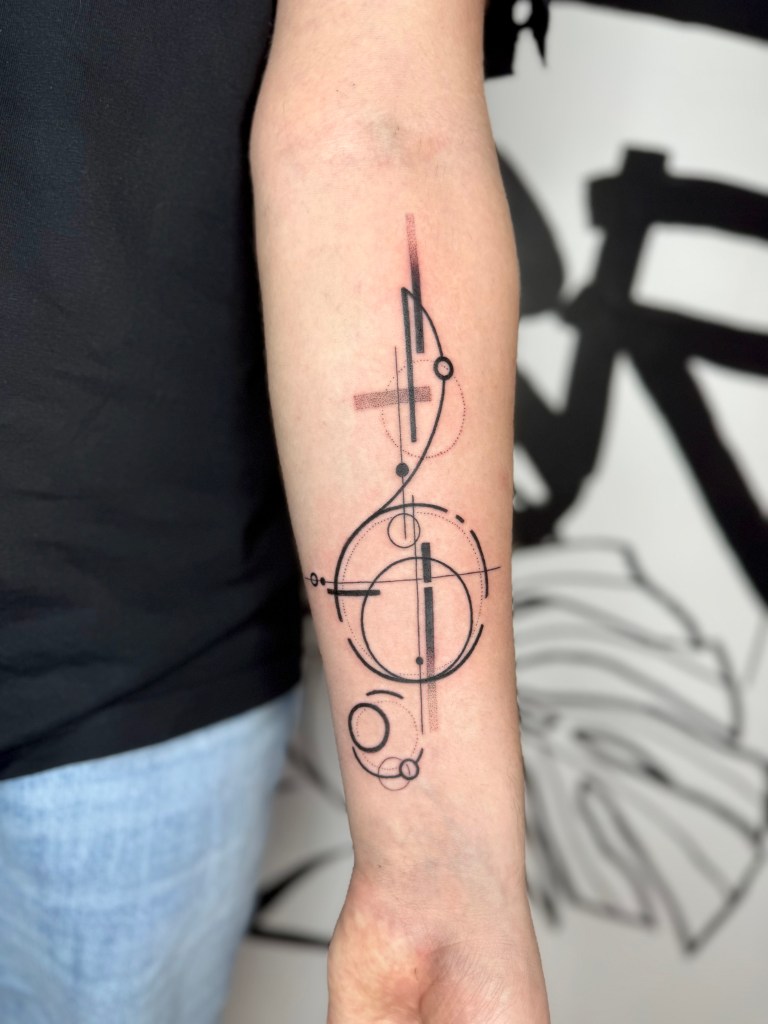
Before the ink
While tattoos might feel like a very modern form of self-expression, the idea of marking the body is anything but new. Humans have been tattooing themselves for thousands of years, from ancient markings and tribal symbols to the elaborate body art we see today. Even mummified remains have been found with tattoos. The tools and techniques have changed considerably, though. In the olden days, tattoo artists would share designs with one another through newspapers and the post, passing ideas between one another. Today, inspiration is everywhere and tattoo designs are more accessible than ever, but there is also an increasing desire for body art that feels entirely personal and bespoke.
As it turns out, that instinct to create something unique was one Cecile had from a very young age. At just 6 years old, she was introduced to the world of street art through an unexpected connection. Her mum’s sister, who was 14 years younger than her mum, was dating a street artist in Paris. When Cecile met him, she was completely captivated by photographs of his work: old-school graffiti filled with cartoon characters. She immediately wanted to try it herself. He introduced her to Posca markers*, and from there, Cecile started drawing graffiti at 6 years old.
But it would be a few more years before those drawings found their way onto skin.
* A Posca marker is a water-based paint pen that writes opaquely on almost any surface.
An ink-redible change in career
Despite having drawn and painted for as long as she can remember, Cecile never really considered art school an option. Growing up in France, she saw her choices as science, economics or literature, so she went with science, partly because she loved nature and animals. At 18, she moved to Lyon to try medical school, but it quickly became clear that medicine wasn’t quite for her.
Art, on the other hand, had always been there. Cecile would draw on anything and everything, from books to bags, and even painting the walls of her apartment in Lyon. She has never had any formal art training, but that certainly didn’t stop her from finding ways to embrace art.
By the time she started tattooing, Cecile was working in biotech, producing antibodies for oncology research. She would go to tattoo artists to get her own designs tattooed on herself, until she figured that if she was designing them anyway, she could learn to tattoo them herself. And so, in 2018, Cecile found herself on the other side of the needle. Her first subject was a banana!
Two days later, she decided that fruit was no longer enough of a challenge and moved on to her own leg, where she tattooed a line with a series of circles. And then came the big one: her first tattoo on another human being, an origami elephant on her partner’s foot. I’m not sure how many people would volunteer their partner’s foot for their first ever tattoo, but thankfully for Cecile, her partner did.
At first, Cecile fitted tattooing around her biotech job, working from her apartment after hours and sharing pictures of her work on Instagram. Soon enough, people other than her partner and friends were asking if she could tattoo them too. As the clients kept coming, she gradually reduced her working hours in biotech, first from 100% to 80%, then from 80% to 60%. At some point, the maths was becoming fairly obvious: she was spending less and less time producing antibodies and more and more time putting ink into people.
She eventually found a tattoo parlour in Lausanne where she could work, and by the time the first lockdowns were over in 2020, she had enough clients to make tattooing her full-time job. Thus began Cecile’s second career.
After a few years of working from different parlours, she was ready for something of her own. Four years ago, she opened Olibrius, her very own tattoo shop.
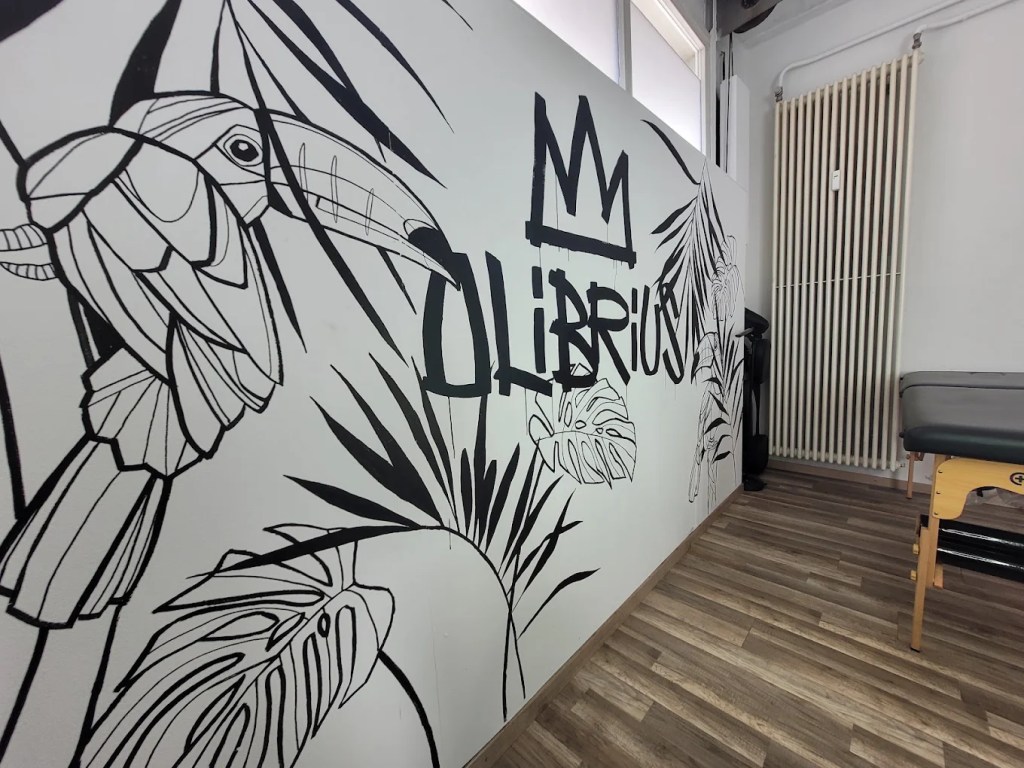
Olibrius is an old French word for an eccentric, foolish or somewhat boastful person, often with a harmlessly odd streak. It is also one of Captain Haddock’s favourite insults in Tintin (in French).
Forming the right team
Opening her own shop was a very positive experience for Cecile, but she was in no rush to fill it with other artists. She already had plenty of clients of her own, so the challenge was not finding people to bring in, but finding the right people. For Cecile, it was important to build a team where everyone could help each other, share what they know and learn from one another.
Running a tattoo shop, as it turns out, is not all tattooing. As the boss, Cecile also has one-to-ones with her team, checks in on how things are going and helps them work through any questions or concerns. She also mentors other artists, reviewing their techniques and offering reassurance when they need it.
Her team currently consists of four people: Cecile, Zoé, Vlad and Rita. And from the sounds of it, finding the right combination of people matters just as much to her as finding the right design for a tattoo.
Finding the right fit
At Olibrius, all appointments are booked in advance, and the process usually starts with an idea. Some clients come with a very specific design in mind, while others know what they want but give Cecile the freedom to interpret it in her own style. Cecile also takes part in Flash Days, which offer a slightly different way of getting a tattoo. She posts a selection of designs on Instagram, and each design is available to only one person. Once someone claims a design, it’s theirs, meaning no one else will get the same one from her. She also travels to other tattoo parlours in different cities and countries, giving people outside Lausanne the chance to get one of her tattoos.
Interestingly, Cecile can also see things in her mind’s eye, which immediately reminded me of Clara, who we featured in Tandem Talks a little while ago. When a client describes a project to her, she can already picture it in her head. She still has to play around with the idea on her tablet, though, figuring out how to turn what she sees in her head into an actual tattoo.
Before any of that, though, there is the matter of the canvas. Placement is a big part of the process, and the same design can look completely different depending on where it sits on the body. Cecile has to think about how much space she has to work with and how the tattoo will sit on that particular part of the body. She also needs to check the skin itself, because not all skin is quite the same. Different parts of the body have different skin thicknesses, and this can vary from person to person. As we get older, skin also becomes thinner, which means Cecile needs to be particularly careful about how she works. But, as she puts it, every skin is tattooable. You just need to know how to work with it.
Once the design, placement and skin have all been considered, the actual tattooing can begin.
Under the needle
At this point in our conversation, it probably won’t surprise you that, as two biologists, Cecile and I somehow ended up talking about the biology behind tattooing. I was approximately one question away from pulling out a diagram of the different layers of the skin.
The process itself is pretty fascinating. Before the needle comes anywhere near the skin, the area is disinfected and the design is transferred onto the skin using a stencil. Then comes a layer of a Vaseline-like ointment, which helps the needle glide smoothly across the skin and keeps it supple while Cecile works. It also makes it easier to wipe away excess ink, so she can see exactly what she is doing.
Then the needle goes in. Tattoo needles puncture the outer layer of the skin, the epidermis, and deposit the ink into the layer underneath it, the dermis. Because the ink is placed below the layer of skin that constantly renews itself, it stays there rather than just disappearing as the skin regenerates.
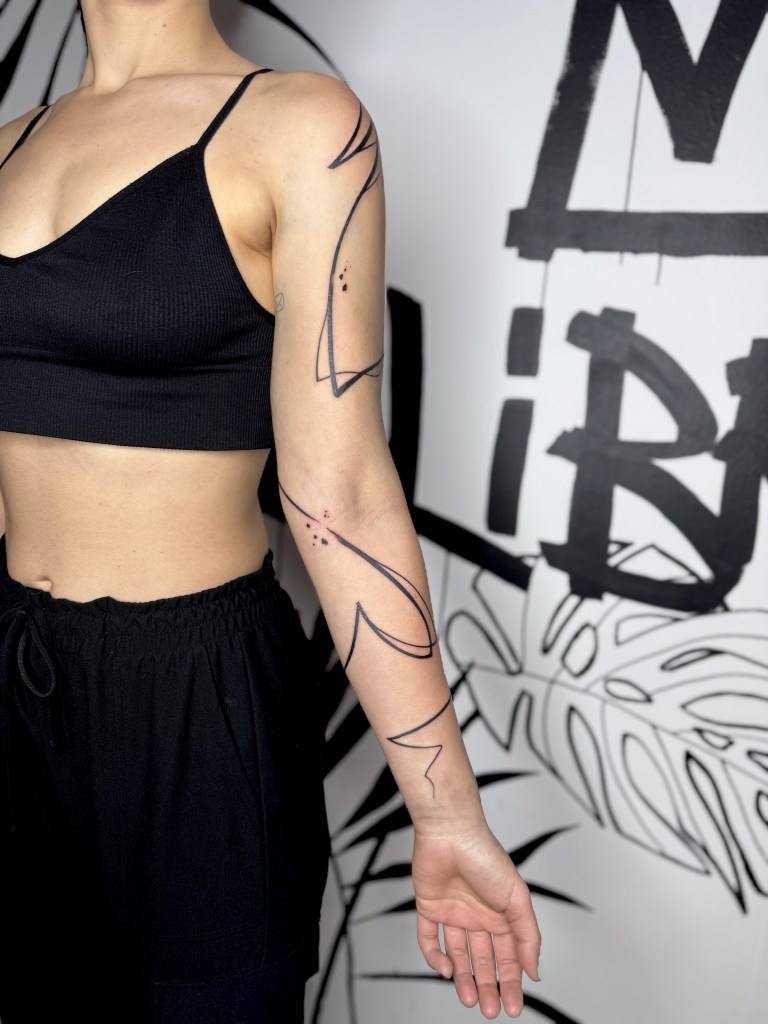
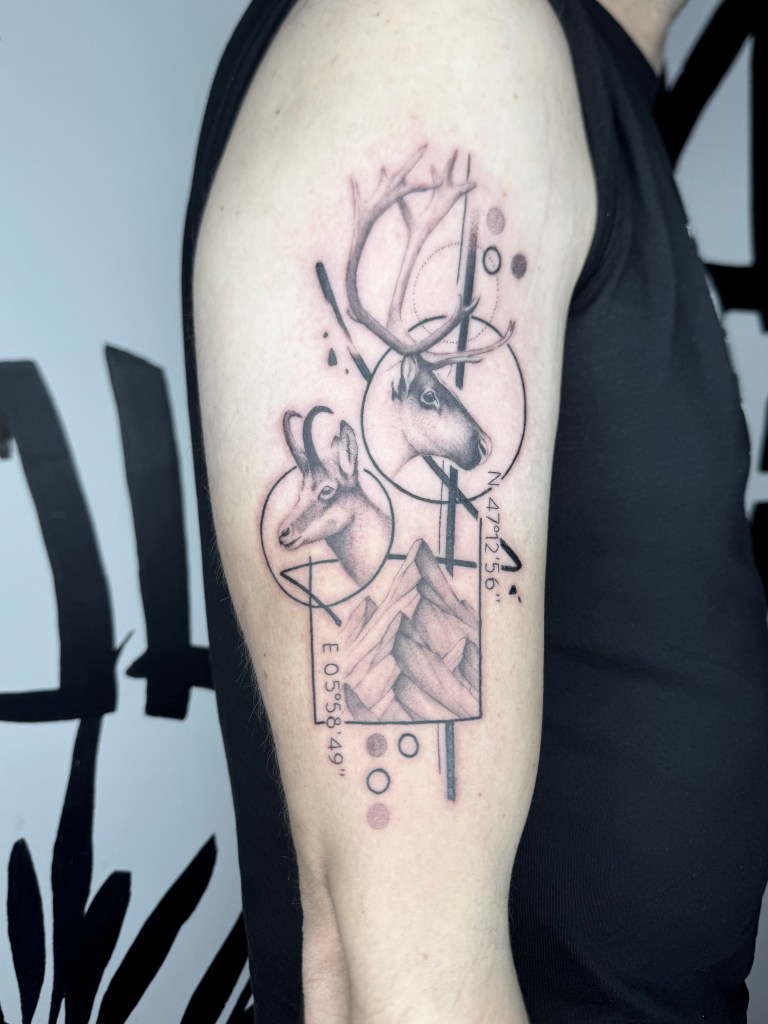
As anyone with a tattoo will know, though, they do fade over time. This is partly because the skin above the tattoo is constantly regenerating, while the ink particles themselves can gradually break down and become less concentrated. There is also the sun, which is not exactly a tattoo’s best friend. UV exposure can contribute to the breakdown of tattoo pigments, so protecting your tattoos from the sun is not just about keeping them looking nice.
The process has also become considerably cleaner and safer over the years. In Switzerland, there are regulations governing which tattoo inks can be used, meaning artists have a much more controlled selection of products to work with.
Over the years, Cecile has worked on all sorts of projects, including tattoos for doctors and oncologists. Despite the occasional concern people have about tattoos and cancer, there is currently no good evidence to suggest that tattoos cause cancer.
Copytats
Putting your designs on Instagram does come with one downside: people can copy them. Cecile regularly finds people who have taken her designs and had them tattooed on themselves, but sometimes it is other tattoo artists doing the copying.
At one music festival, she spotted a tattoo stand with a whole book of her flash designs. The artist running it was a fairly intimidating-looking guy with tattoos all over his face. Cecile asked him if he made his own designs. He looked her straight in the face and said yes.
When she told him the designs were hers, he changed his story. Apparently, he didn’t actually own the stand. It was probably his boss who had copied them.
Another time, there was the convention where she discovered an artist who was tattooing exclusively from her designs. She only found out because one of the clients had a tattoo go wrong. While trying to find the artist who had done it, the client somehow ended up finding Cecile instead. She contacted the artist, who was apparently mortified.
If someone is going to copy your work, the least they could do is get it right.
A thousand tattoos and counting
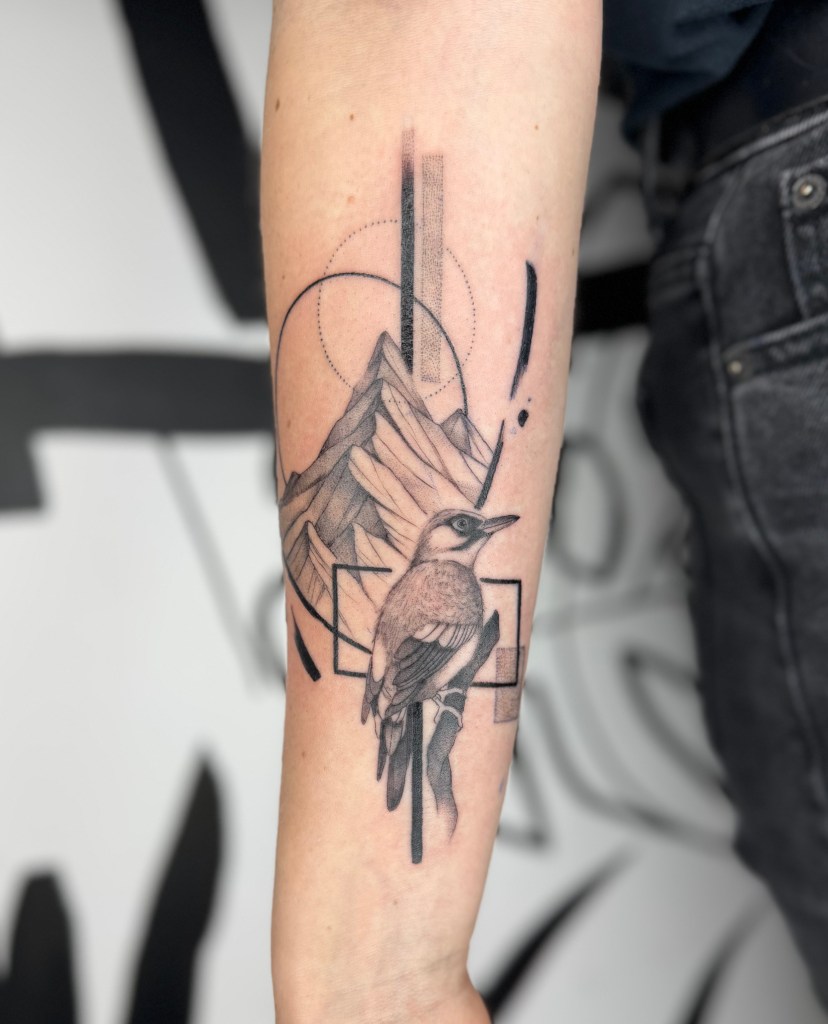
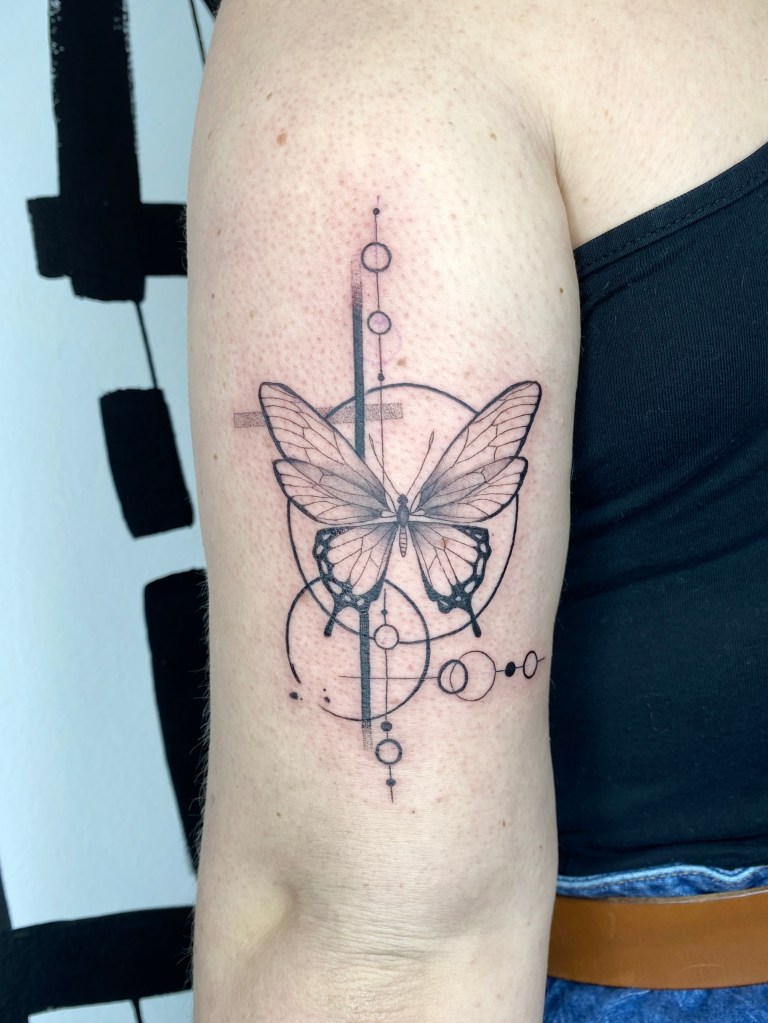
Some of her favourite projects have been big, bold pieces, including a series of flowers with huge black lines. Her graffiti background still comes through in her work, particularly in the backgrounds of her designs, while the foreground tends to be more realistic. She particularly enjoys projects where she can work on a whole section of the body, like an entire leg, and these are becoming increasingly possible as her client base grows.
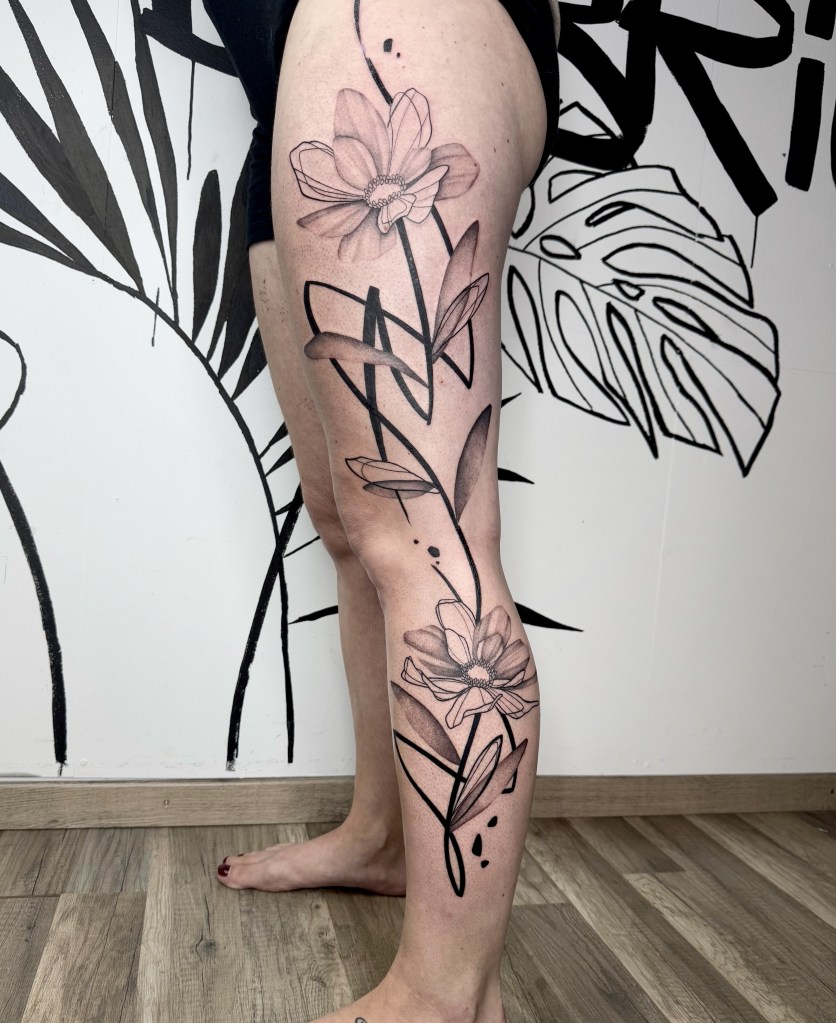
(Not that every part of the body is quite so enjoyable. Ribs and throats remain some of her most challenging places to tattoo.)
By now, Cecile estimates that she has tattooed more than a thousand people, many of whom have come back for more. And tattooing isn’t the only way she gets to create. She also makes artwork that never makes it onto skin, including one very special piece that happens to be hanging in my home.
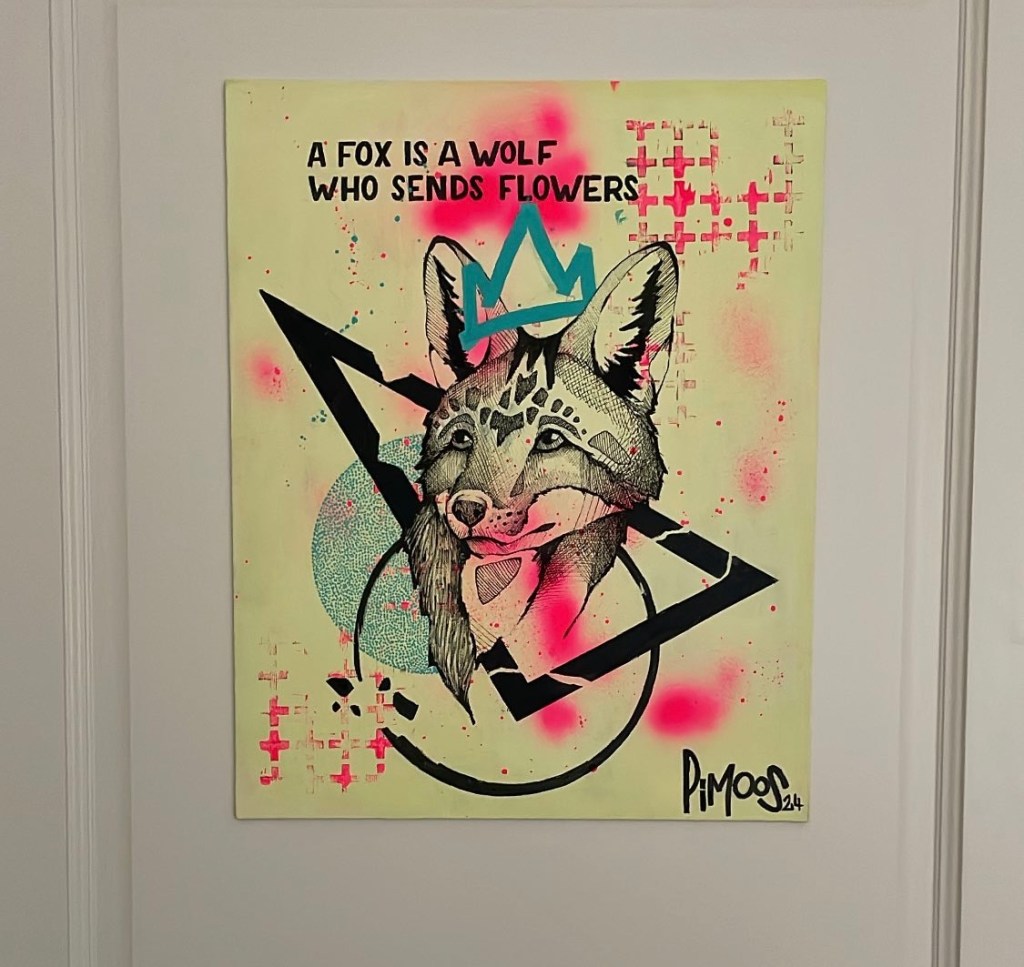
But for Cecile, it still feels like the beginning. There are countless projects she would love to take on, and plenty more things she wants to explore. And now, with a new artist recently having joined the Olibrius team, she is about to take the next step.
Olibrius 2.0 launches in just a couple of weeks! To think it all started with a banana.
If you’ve been keeping count, you may have noticed that we’re almost at article number 20. I can’t reveal much just yet, but the next story might be somewhat related.


Leave a Reply